


Your Custom Text Here
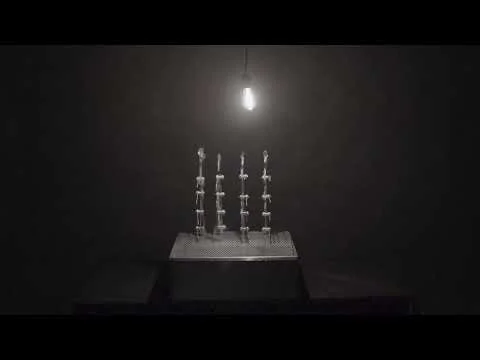
This fountain explores the relationship between trauma, repair, and the fragile structures that hold the body together. The work is built using surgical fixators—medical devices typically used to stabilize fractured bones during healing. Removed from their clinical context, these instruments become part of a mechanical system that regulates the flow of water.
The structure holds and directs the movement of water as it rises and falls in a continuous loop. This cyclical motion reflects the way trauma and recovery often unfold: as a recurring negotiation between instability and repair. Just as fixators temporarily support a damaged body, the apparatus maintains a delicate balance within the system.
By transforming medical tools into a functioning fountain, the work connects physical mechanisms of repair with emotional processes of endurance and recovery. The sculpture becomes a space where vulnerability and resilience coexist, suggesting that healing is not the absence of fracture but the ongoing act of holding oneself together.
The water rises, falls, and rises again, echoing the way trauma can resurface but also how healing repeats itself over time. Its endless loop mirrors the tension between collapse and recovery, showing trauma not as something that vanishes but as something that can be carried, reshaped, and lived with.
This fountain explores the relationship between trauma, repair, and the fragile structures that hold the body together. The work is built using surgical fixators—medical devices typically used to stabilize fractured bones during healing. Removed from their clinical context, these instruments become part of a mechanical system that regulates the flow of water.
The structure holds and directs the movement of water as it rises and falls in a continuous loop. This cyclical motion reflects the way trauma and recovery often unfold: as a recurring negotiation between instability and repair. Just as fixators temporarily support a damaged body, the apparatus maintains a delicate balance within the system.
By transforming medical tools into a functioning fountain, the work connects physical mechanisms of repair with emotional processes of endurance and recovery. The sculpture becomes a space where vulnerability and resilience coexist, suggesting that healing is not the absence of fracture but the ongoing act of holding oneself together.
The water rises, falls, and rises again, echoing the way trauma can resurface but also how healing repeats itself over time. Its endless loop mirrors the tension between collapse and recovery, showing trauma not as something that vanishes but as something that can be carried, reshaped, and lived with.